Architectural Window Film for Commercial Buildings and Custom Homes with Large Glass
iTint ATX is an architectural window film contractor specializing in the evaluation, specification, validation, and installation of window film systems for existing architectural glass.
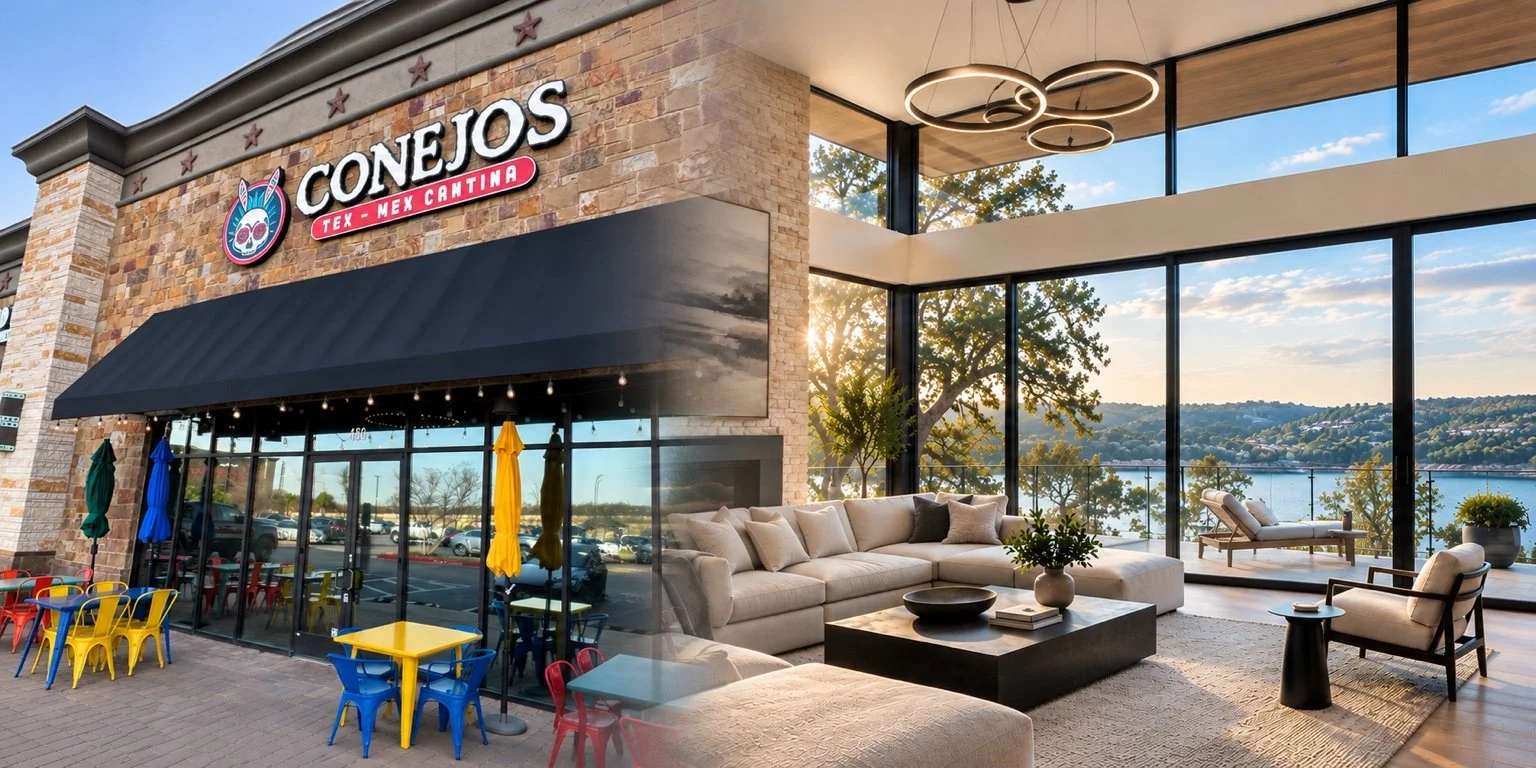
We work with commercial buildings and custom architectural residences with substantial glazing where the existing glass is an important part of how the property looks, feels, and functions.
Our role is not simply to install window film. We first work to understand the existing glazing, the conditions affecting it, what needs to improve, and what needs to remain unchanged. Appropriate window film systems can then be evaluated for the actual project.
Commercial Architectural Glazing + Custom Residential Architectural Glazing
Existing Glass in Working Environments
iTint works with commercial properties where architectural glass creates meaningful performance or visual conditions within occupied spaces.
Building configuration, glazing, exposure, use of the space, access, operating conditions, project requirements, and authority can all affect how the project should be approached.
Substantial Glass Without Losing What Makes It Valuable
iTint also works with custom residences where large windows, expansive glass walls, floor-to-ceiling glazing, large sliding glass systems, or other substantial architectural glass are an important part of the home.
Improving the performance of that glass may need to be balanced with preserving natural light, exterior appearance, interior character, and views.
Property type establishes possible relevance—not project qualification. A commercial building is not automatically a good project for iTint, and a custom home is not automatically a good project simply because it has a lot of glass.
Start With What You’re Experiencing — Not With a Film
You do not need to know what type of window film you need before speaking with iTint. The starting point can simply be what you are noticing, what is making the space difficult to use, or what you want the existing glass to do differently.
Too Much Solar Heat
Sun-exposed glazing can contribute to uncomfortable conditions in occupied spaces. The concern may be localized to particular rooms, elevations, or times of day.
Glare and Excessive Brightness
Strong daylight and reflected light can interfere with screens, visibility, comfort, and the practical use of a space.
Daytime Visual Privacy
Some glazing creates unwanted visibility into occupied spaces during the day. Daytime privacy performance depends on the relationship between exterior and interior lighting and does not establish guaranteed one-way or nighttime privacy.
Fading and Photodegradation Concerns
Floors, furnishings, artwork, finishes, and merchandise may be exposed to multiple contributors to fading and degradation. Mitigation means reducing relevant exposure to help slow that process—not guaranteeing that fading can be prevented.
Preserving Daylight
Improving performance should not automatically mean making a space unnecessarily dark. Useful daylight can itself be an important project objective.
Preserving the Reason the Glass Exists
Large architectural glass often exists to create openness, connection, natural light, or a view. Those qualities may need to remain active requirements while other problems are addressed.
Recognizing a concern is not the same as diagnosing its cause. Heat, glare, privacy, fading, daylight, and view can establish that the situation is relevant to what iTint evaluates. They do not, by themselves, identify the correct film or prove what is technically causing the condition.
Heat · Glare · Privacy · Interior Exposure · Daylight · View
The Problem Alone Does Not Determine the Solution
Two properties can report the same problem and still require different technical considerations. The decision has to be grounded in the actual glass, the property, its exposure, how the space is used, what the project must accomplish, and what remains uncertain.
Property and Glazing
The property contains an actual glazing system with its own configuration and physical characteristics.
Exposure and Conditions
Orientation, solar exposure, surrounding conditions, and use of the space can contribute to what occupants experience.
Problem and Desired Outcome
A recognized problem establishes the need for a performance requirement. The desired outcome helps define what that requirement is trying to accomplish.
Requirements and Constraints
The project needs to establish what must improve and what limits the acceptable solution space.
Unknowns Stay Unknown
Missing information should not be filled with assumptions. Important uncertainty remains unresolved until observation, documentation, measurement, validation, or another appropriate evidence-producing event supports a conclusion.
Observation is not diagnosis. Exposure can contribute to a problem without independently proving its cause, and the same symptom does not automatically lead to the same window film.
Property + Glazing + Exposure + Occupied-Space Context
A Real Project Usually Needs More Than One Thing
A project may need to reduce heat and glare, improve daytime privacy, reduce fading exposure, preserve daylight, protect a view, maintain an architectural appearance, or satisfy other legitimate requirements at the same time.
Those needs do not have to collapse into one goal. Each requirement can remain distinct while still becoming part of one coherent project decision.
That distinction matters because technical necessity, customer priority, preference, and constraint do not perform the same job.
What Must Remain Acceptable
A requirement may be mandatory regardless of whether it is the customer's most visible or emotionally important objective.
What Matters More Within Acceptable Options
Requirements may be Primary, Co-Primary, or Secondary. Priority helps compare acceptable choices later; it does not erase the other requirements.
What the Customer Would Prefer
Appearance, shade, reflectivity, daylight, view, or other preferences may influence the decision but cannot make a technically unacceptable system acceptable.
What the Solution Cannot Violate
Hard constraints continue to bound the acceptable solution space even when another objective has higher priority.
Secondary does not mean optional. A lower-priority requirement can still matter, and priority cannot rescue a solution that fails a mandatory requirement or violates a hard constraint.
Heat + Glare + View + Daylight + Privacy + Appearance
A Good Project Is More Than Just a Lot of Glass
A relevant problem and a large amount of architectural glass do not automatically mean a project should move forward. Project fit depends on how the physical property, work environment, access, configuration, complexity, operating conditions, and decision structure interact.
Glazing Concentration & Configuration
The amount of glass alone is not the deciding factor. How the glazing is distributed, configured, and grouped can affect project execution and continuity.
Access & Workface Continuity
Access to the glass, movement through the property, staging, setup, furniture, active work areas, and continuity of the installation environment may materially affect the project.
How the Property Has to Keep Functioning
Occupied commercial spaces, residences, operating schedules, customer traffic, building activity, and other real-world conditions may affect how or whether the project can progress.
Production & Administrative Conditions
Setup complexity, movement, configuration, administrative requirements, coordination, and other project conditions can influence overall fit.
Who Can Decide and Who Can Authorize
The person reporting the problem is not always the person who selects the solution or has authority to authorize the work. Those roles must remain distinct.
No Universal Qualification Score
Property type, geography, prestige, home value, total square footage, or glass quantity do not independently establish that a project is qualified.
Project qualification and film-system eligibility are different decisions. Determining that a project can appropriately progress does not establish that a particular film is technically suitable for that project.
Glazing Scale + Access + Staging + Active Property Context
We Don’t Start With a Favorite Film
Once the project, requirements, constraints, priorities, and fit are understood, window film systems can be evaluated against the actual project. Product specifications inform what a film can do; they do not independently establish that it belongs on a particular piece of glass.
Available Film
A film being available from a manufacturer does not automatically make it relevant to the project.
Candidate
A system may become a candidate because its capabilities appear relevant to established project requirements.
Eligibility
Candidates are evaluated against the project's requirements and constraints. A candidate can be eligible, ineligible, or remain unresolved pending sufficient evidence.
Validation Where It Matters
When material uncertainty needs to be resolved, validation may involve real samples, actual project glass, observation under project conditions, manufacturer information, measurement, or another appropriate evidence-producing method.
Validation Finding
Validation produces findings. A finding can change eligibility or inform comparison, but a finding is not itself the final professional recommendation.
Whole-Project Comparison
Eligible systems are compared against the project as a whole, including performance requirements, hard constraints, priorities, preferences, tradeoffs, unresolved uncertainty, and what the project is trying to preserve.
Professional Recommendation
iTint's recommendation is a comparative professional judgment based on whole-project fit—not simply the strongest number on a specification sheet.
Selection, Authorization & Installation
The professional recommendation informs customer selection. Selection precedes authorization, and authorization precedes installation.
Maximum performance on one metric is not automatically the optimal whole-project solution. A stronger specification can still be the wrong choice if it conflicts with another requirement, hard constraint, visual priority, daylight objective, view, privacy condition, or other project need.
Actual-Glass Samples · Mockups · Appearance Comparison · Project-Specific Evaluation
Now We Can Start With the Property, the Glass, and What You Need to Change
The Root explains how iTint approaches architectural window-film decisions. Your actual project still has to be evaluated using its own physical conditions, concerns, requirements, constraints, authority, and unresolved information.
Start Your Project